
The Future of African Media Belongs to Creators Who Own Their Audience Relationships
African creators are building audiences of thousands, sometimes millions, across social media. But how much of that success do they actually control? As the creator economy matures, the biggest opportunity lies in building intellectual property, loyal communities and sustainable businesses that extend beyond platform algorithms.
Imagine spending five years building a social media audience of 500,000 followers.
Your videos attract thousands of views. Brands regularly approach you for collaborations. Your content is recognisable, and your audience genuinely enjoys what you create.
Then, one day, the algorithm changes.
Your reach drops. Engagement declines. Brand enquiries slow down.
You haven’t suddenly become less talented. Your content hasn’t necessarily become worse.
But the platform you depend on is no longer distributing your work in the same way.
Now comes the uncomfortable question.
If your social media reach disappeared tomorrow, what would remain of your creator business?
Would you still have customers? A recognisable brand? An original content property? Products people are willing to buy? A community that knows how to find you?
Or would you simply have to start chasing the algorithm again?
This is becoming one of the most important questions in Africa’s creator economy.
And according to PwC’s Africa Entertainment & Media Outlook 2026–2030, the next phase of media growth will increasingly depend on who controls, understands and sustains audience relationships.
For African creators, that points towards a fundamental shift.
The future is not just about building an audience. It is about building something valuable around that audience.
The Problem with Building Your Entire Business on Social Media
Social media platforms have transformed creative opportunities across Africa.
A talented comedian in Nairobi can reach audiences in Lagos. A fashion creator in Accra can attract international customers. A South African educator can build a global community without owning a television station or publishing company.
The barriers to distribution have fallen dramatically.
But there is a catch.
Creators control what they produce, within the platforms’ rules, but they have limited control over how that content is distributed.
Platforms determine recommendation systems, monetisation eligibility, advertising policies and audience visibility.
Those decisions can change.
In March 2026, Meta updated its guidelines for original content on Facebook, explaining how original content would receive greater distribution opportunities while duplicated and low-value reposted material could be deprioritised.
The changes may benefit creators producing original work, but they also illustrate how platform decisions can reshape reach and earning opportunities.
This does not mean creators should abandon social media.
Quite the opposite.
Social platforms remain powerful tools for discovery, storytelling, community engagement and audience growth.
But they should be treated as distribution channels, not the entire foundation of a business.
A creator may have 100,000 Instagram followers without having a direct way to contact those people outside Instagram.
That is the difference between having access to an audience and having an independent relationship with it.
1. Intellectual Property Could Become a Creator’s Most Valuable Asset
One of the biggest missed opportunities in Africa’s creator economy is the commercial value of original ideas.
Consider a comedy creator who develops a recognisable character.
Audiences know the character’s personality, catchphrases and recurring situations.
The creator builds a following through short videos.
But what happens next?
If the creator only earns through occasional sponsored posts, the commercial potential of that character may remain largely untapped.
Now imagine the same creator developing an original comedy series, licensed merchandise, live performances or a longer-form production built around that character.
The creator is no longer simply publishing content.
They are building intellectual property.
The same principle applies to educational creators developing learning materials, musicians creating original recordings, filmmakers producing documentaries and gaming creators developing distinctive entertainment formats.
Intellectual property can potentially generate value through licensing, distribution, merchandise, adaptations and other commercial arrangements.
PwC identifies original content, licensing and multiple distribution channels as important opportunities for African media businesses.
Why ownership matters
Creators should understand which rights they retain when entering commercial partnerships.
A brand paying for a sponsored video does not automatically need unrestricted rights to use that content forever.
Agreements should clearly address ownership, permitted usage, licensing periods, territories and whether additional compensation applies.
Creators should also maintain records of their original work and understand relevant copyright protections.
This is particularly important given findings from UNESCO’s 2026 study of digital content creation in Kenya, which reported that 68.9% of surveyed creators were unaware of relevant national legislation concerning defamation and copyright.
For creators, protecting original work is not just a legal consideration.
It is a business decision.
A viral video might generate attention for a week. A well-developed original property can potentially create opportunities for years.
2. The Next Competitive Advantage Is Community, Not Follower Count
There is a difference between someone who follows your account and someone who genuinely values what you create.
A follower might enjoy one viral video.
A community member returns regularly, participates in conversations, shares feedback and may actively support your work.
That distinction becomes increasingly important as social media audiences grow more fragmented.
Imagine two fitness creators.
The first has 200,000 followers but limited interaction beyond likes and views.
The second has 20,000 followers, an active fitness community, regular discussions and customers who have purchased training programmes.
The first creator has greater potential reach.
The second may have a stronger direct commercial relationship with their audience.
Neither model is automatically superior, but their business opportunities are very different.
How creators can build stronger audience relationships
Creators should give their audiences reasons to engage beyond the social media feed.
This could involve a newsletter, an opt-in WhatsApp community, a website, a membership programme or recurring offline experiences.
A technology creator might establish a newsletter featuring product comparisons.
A parenting creator could host regular community discussions.
A business educator might develop a subscriber community focused on practical entrepreneurship.
These channels can make it easier to maintain relationships even when social media distribution changes.
However, ownership of an audience relationship does not mean ownership of the people or their personal information.
Creators should collect contact information transparently, respect consent, protect customer data and make it easy for people to leave.
The goal is not to replace the algorithm with unsolicited marketing.
It is to build relationships people actively choose to maintain.
Followers discover you. Communities give people a reason to stay.
3. Independent Revenue Streams Will Define Sustainable Creator Businesses
The commercial risk of relying entirely on platform algorithms becomes even clearer when looking at creator earnings.
According to the Africa Creator Economy Report 2026, covered by Techpoint Africa, approximately six in ten surveyed African creators earn less than US$100 monthly from their creative work.
Brand sponsorships accounted for 28% of reported creator income, while digital products and services represented 25%, physical merchandise 14.2% and advertising revenue 5.8%.
These findings reveal an important reality.
The creator economy is much bigger than sponsorships and platform payouts.
Creators are already generating income through products, services and direct commercial relationships.
Consider a Kenyan food creator.
They might initially build an audience by sharing affordable recipes on TikTok.
Over time, that audience could support several business opportunities.
The creator could sell recipe guides, provide cooking classes, develop a meal-planning service or partner with relevant food brands.
A single piece of content might introduce someone to the creator, but the long-term commercial relationship could exist independently of the original platform.
The same applies to fashion, fitness, technology, education and entertainment.
From attention to transactions
The key is identifying what audiences genuinely need and what they are willing to pay for.
A creator with expertise in photography could sell workshops or editing presets.
A financial educator might develop paid learning resources.
A fashion creator could offer styling services or build a product collection.
Affiliate marketing provides another opportunity by allowing creators to earn commissions from qualifying product sales.
Through Twiva Commerce, creators can explore digital storefronts and commission-based selling as alternatives to relying exclusively on sponsored campaigns.
As discussed in Twiva’s article on how African creators are actually making money, the shift towards products, services and social commerce is helping redefine what creator monetisation looks like.
But diversification should be deliberate.
Launching merchandise simply because other creators are doing it is not a business strategy.
A successful revenue model must consider audience needs, production costs, demand, pricing and profitability.
The objective is not to monetise every interaction.
It is to develop commercial offerings that provide genuine value.
4. Direct Audience Relationships Could Transform African Commerce
Africa presents distinctive opportunities for creator-led businesses.
Many consumers already discover products through social media, ask questions through messaging platforms and complete purchases using locally available payment methods.
This creates opportunities for creators to build direct customer relationships without relying exclusively on traditional retail channels.
For example, a creator might introduce a product through an Instagram video, answer questions during a livestream and direct interested customers to a digital storefront.
The relationship does not necessarily end when the product is purchased.
Customers may return for recommendations, support, additional products or future experiences.
This is particularly relevant in markets where mobile-first commerce plays an important role.
However, digital participation remains uneven.
The GSMA Mobile Economy Africa 2026 report estimates that 63% of Africa’s population was not using mobile internet in 2025 despite living within mobile broadband coverage.
Affordability, digital skills and access remain significant barriers.
For African creators, this means business models must reflect local realities.
A low-cost digital guide might be more accessible to one audience than an expensive monthly subscription.
A mobile-friendly storefront may work better than a complicated desktop purchasing experience.
A WhatsApp-based customer support process may be valuable for customers who prefer conversational shopping.
The lesson is straightforward.
The most successful creator businesses will not necessarily copy global monetisation models. They will develop solutions that work for their audiences and markets.
5. Building a Creator Business Requires More Than Great Content
There is another difference between being a successful content creator and operating a sustainable media business.
A business requires systems.
That includes understanding revenue, expenses, customer relationships, pricing, intellectual property, contracts and financial obligations.
Creators also need to evaluate their performance differently.
Social media metrics remain useful, but they do not tell the entire story.
A video generating one million views is impressive.
But how many people became newsletter subscribers? How many purchased a product? How many returned as customers? Did the creator earn enough to cover production expenses?
Those questions help reveal whether audience growth is translating into business growth.
Twiva’s guide on turning content into a sustainable career explores why creators need to measure both content performance and commercial outcomes.
Professional training also matters.
Through Twiva Academy, creators can develop skills around content strategy, branding, monetisation and professional growth.
But education must be supported by dependable business relationships.
Creators need clear commercial agreements, fair compensation and reliable payment processes.
A creator business cannot plan confidently if it has no visibility over earnings or outstanding payments.
As Africa’s creator economy matures, professionalism will increasingly be a shared responsibility among creators, brands, agencies and platforms.
6. What Would an Audience-Owned Creator Business Look Like?
Consider a fictional Kenyan fashion creator who has built an Instagram following of 50,000 people.
Their existing model depends primarily on sponsored posts.
They have strong engagement but no independent website, customer database or products.
Now imagine that creator spends the next year developing a more sustainable business.
They launch a simple website featuring their work and services.
They establish an opt-in newsletter sharing styling advice.
They develop a recurring fashion series that audiences recognise.
They introduce paid styling consultations and affiliate product recommendations.
They negotiate longer-term brand partnerships with clear content usage rights.
And they maintain records of their customers, revenue, expenses and contractual commitments.
Instagram remains essential to discovery.
But the creator’s entire commercial future no longer depends on Instagram alone.
They have developed several assets: a brand, original content, direct customer relationships, business knowledge and multiple income opportunities.
That is what building beyond the algorithm looks like.
It does not require millions of followers.
It requires turning the audience you already have into relationships and offerings that deliver lasting value.
What African Creators Should Start Doing Before 2027
For creators thinking about the next phase of their careers, the process can begin with five practical decisions.
▪️ First, identify what you own. Review your original content, brand identity, intellectual property and commercial rights.
▪️ Second, establish a direct audience channel. Build a website, newsletter or opt-in community that complements your social media presence.
▪️ Third, develop one independent income stream. Start with a product or service that aligns with your expertise and audience needs.
▪️ Fourth, measure business performance. Track revenue, profit, leads, customer retention and repeat purchases alongside views and engagement.
▪️ Finally, strengthen your professional skills. Invest in understanding contracts, pricing, financial management and commercial negotiations.
You do not need to implement everything immediately.
The important thing is to stop treating follower growth as the final destination.
The Future of African Media Is About Ownership, Not Just Attention
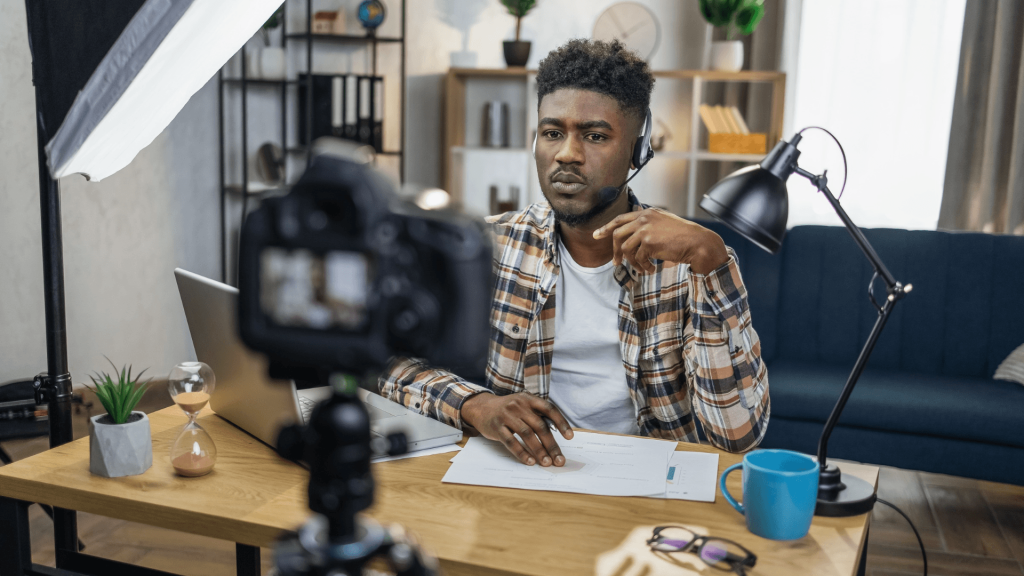
Africa’s entertainment and media industry is entering an exciting period.
Digital advertising is expanding. Streaming and gaming audiences are growing. Artificial intelligence is making content production more accessible.
But greater digital access does not automatically create sustainable creator businesses.
PwC’s latest outlook points towards a future where intellectual property, trusted audience relationships, direct customer connections and diversified revenue become increasingly important.
For African creators, this represents an opportunity to rethink what success looks like.
It is no longer enough to ask how many people watched your latest video.
The more important questions are becoming:
What have you built around that attention?
How much of its value can you retain?
And will it still matter if the algorithm changes tomorrow?
At Twiva, we believe Africa’s creators should have access to the skills, commercial opportunities and tools needed to build sustainable businesses around their creativity.
Because the creator economy should not simply help people become famous online.
It should help them build something that lasts.
The platforms may control the distribution. But creators can build the relationships, intellectual property and businesses that give their work lasting value.
And that is where the future of African media gets interesting.